

















The Email (or Meeting) You Wish You Could Take Back
It happens to the best of us. You send a perfectly reasonable Slack message, only to realize an hour later that your colleague took it as a personal attack. Or, you try to advocate for a promotion in a 1-on-1, but the conversation veers so far off track that you leave the room wondering if you were even speaking the same language.
In the professional world, the gap between what we intend to say and what is actually heard is where careers can stall. Dethra Giles, an acclaimed speaker and executive coach, identifies this as a lack of “conversational competence.”
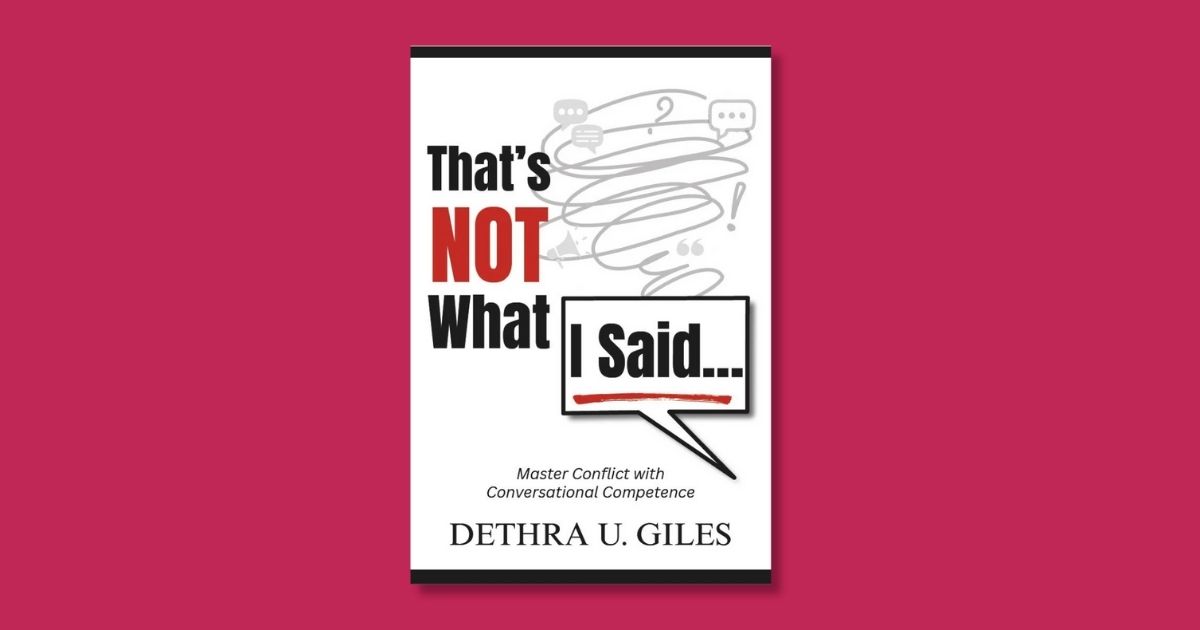
This month, CFW recommends That’s Not What I Said: Learn Conversational Competence and Change the Outcome. This isn’t just a book for the C-suite; it’s a field guide for every woman who wants to stop navigating workplace landmines and start building a reputation for clear, effective communication.
What is Conversational Competence?
Most of us are taught how to “talk” at work, but few of us are taught how to navigate a conversation when the stakes are high or the emotions are bubbling just under the surface.
Giles argues that “Conversational Competence” is a skill you can build, much like learning a new software or mastering a budget. It’s the ability to steer an interaction toward a productive outcome, whether you’re asking for a raise, giving a peer feedback, or clarifying a project scope with a difficult manager.
The goal isn’t to be the loudest person in the room—it’s to be the most effective. (Because, let’s be honest: “per my last email” is rarely the career-advancement strategy we think it is.)
Your Key Takeaways: The DARE™ Model
At the heart of the book is Giles’ signature DARE™ Model. It’s a tactical, step-by-step approach designed to help you stay grounded and get results:
- Describe: When a conversation gets tense, we often lead with our feelings. Giles suggests starting by describing the objective facts. This takes the “heat” out of the room and gives everyone a shared starting point.
- Acknowledge: This is where you validate the other person’s perspective. You don’t have to agree with them to acknowledge their reality. This small step builds the psychological safety needed to actually solve the problem.
- Review: This is the diagnostic phase. What are the roadblocks? What are the potential solutions? By reviewing the options together, you move from “me vs. you” to “us vs. the problem.”
- Engage: Don’t let a conversation end in a “polite” stalemate. Clearly define the next steps, expectations, and commitments. Conversational competence means ensuring everyone leaves the conversation knowing exactly what happens next.
Final Thoughts
Whether you are just starting your career or you’ve been in the game for decades, That’s Not What I Said provides the tools to stop avoiding the “hard” conversations and start mastering them. If you’re ready to move from being misunderstood to being a “must-have” member of any team, this is your roadmap.
Take the Next Step
Learn from the Expert: Dethra Giles is a favorite across the Conferences for Women stages. You can learn more about her insights on leadership and “conversational competence” at DethraGiles.com.
Order the Book: Ready to change your outcomes? Order your copy of That’s Not What I Said at 3gpublishinginc.com.