


















You’ve Read the Boundaries Book. This Is the Harder One.
Nedra Glover Tawwab already changed how a lot of us think about relationships. Set Boundaries, Find Peace became an instant New York Times bestseller, translated into more than 35 languages, and handed millions of people the language to protect their time and energy.
The Balancing Act asks the question that follows. You’ve learned to protect yourself. Are you actually letting anyone in?
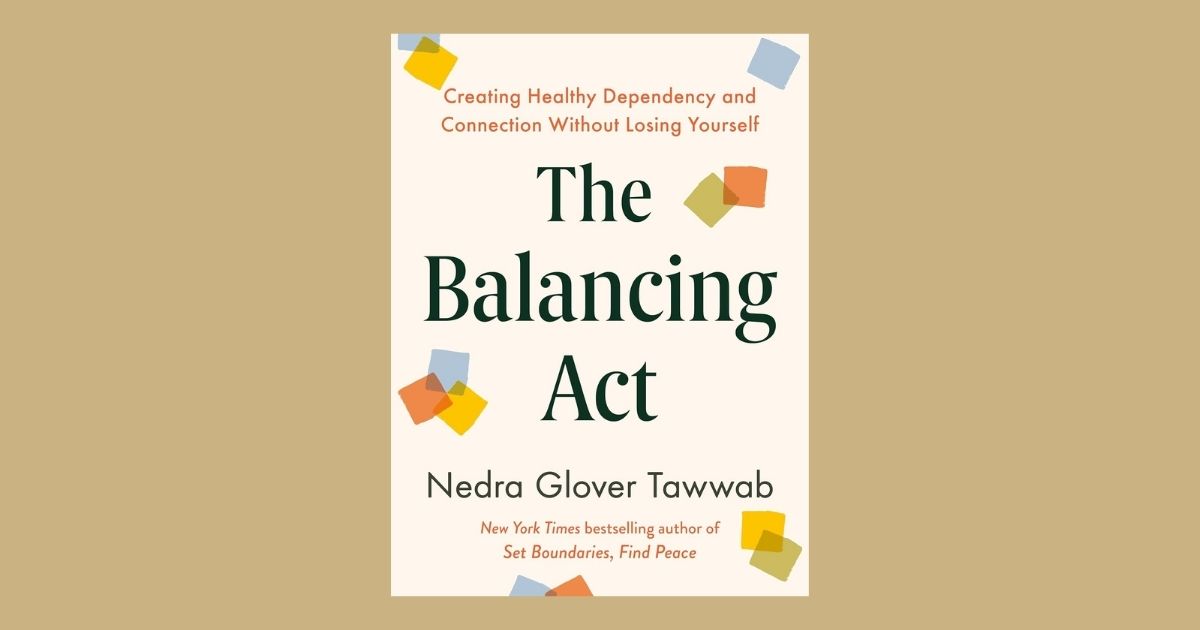
The Balancing Act: Creating Healthy Dependency and Connection Without Losing Yourself is the next conversation, and for high-achieving women who have spent years mastering self-sufficiency, it may be the more uncomfortable one.
Who Is Nedra Glover Tawwab?
Tawwab is a licensed therapist and relationship expert with nearly two decades of clinical practice and the founder of a group therapy practice. She was named to the TIME 100 list of Most Influential People in Global Health, has appeared on Good Morning America, The Breakfast Club, CBS Mornings, The Oprah Podcast, and We Can Do Hard Things, and reaches over 2.5 million followers across her platforms.
She is also a returning CFW voice. Tawwab spoke at the 2025 National Conference for Women, and her 2026 Pennsylvania Conference for Women session, The Career Cost of Doing It All Yourself, draws on both Set Boundaries and The Balancing Act to examine how constantly saying yes leads to burnout, resentment, and stalled growth.
What the Book Argues
Tawwab opens on a tension most of us recognize. Give too much of yourself and you lose track of who you are. Hold back too much and you become unreachable. Neither extreme holds for long.
The book examines two patterns that keep people stuck at those poles. Codependency is the familiar one, where your sense of self dissolves into other people’s needs. Counter-dependency is the one that gets less attention, where you protect yourself so thoroughly that closeness becomes impossible. Tawwab takes both seriously, and she is direct about the fact that our culture tends to pathologize the first while celebrating the second.
Her alternative is what she calls healthy dependency: the capacity to lean on others, ask for what you need, and be genuinely known, without losing yourself in the process. The book covers attachment styles, hyper-independence, the difference between a boundary and a wall, the value of a varied social circle, and how to handle conflict in ways that deepen rather than damage a relationship. Each chapter ends with reflective questions, which makes this more workbook than manifesto.
If you’re expecting the tight, quotable structure of Set Boundaries, this is a different reading experience. It’s more discursive and asks more of you. That’s largely the point, given the subject.
What You’ll Take Away
- Hyper-independence is a defense, not a virtue. The belief that needing no one equals strength turns out to predict loneliness fairly reliably. Tawwab is compassionate about where the pattern comes from and clear about what it costs.
- A boundary and a wall are not the same thing. Boundaries protect your capacity for connection. Walls prevent it. If you’ve been using boundary language to keep people at a distance, this section will land.
- Healthy dependency is the actual goal. Not independence. The ability to rely on others while staying rooted in yourself is what Tawwab argues sustains people through difficulty.
- Attachment patterns show up at work too. The book’s treatment of anxious and avoidant styles is accessible and non-clinical, and the dynamics translate directly to teams, managers, and colleagues.
- A varied social circle is a resilience strategy. Concentrating all your relational needs in one or two people strains those relationships and leaves you exposed. Tawwab makes a practical case for breadth alongside depth.
Why We’re Recommending It
The CFW community has embraced the boundaries conversation, and rightly. The Balancing Act extends it into territory that’s harder to talk about: staying open to people when closing off would be easier.
Tawwab has a gift for making the complicated feel clear. This is her most nuanced work, and for anyone who has wondered why being strong and being close seem to pull against each other, it resolves the question.
Related from the CFW Bookshelf: This pairs well with Fighting for Our Friendships by Danielle Bayard Jackson and The Business of Friendship by Shasta Nelson, both of which take up connection from different angles.
Get the Book
The Balancing Act: Creating Healthy Dependency and Connection Without Losing Yourself is available wherever books are sold, including BookPeople, Amazon, Penguin Random House, and Bookshop.org.
Learn more about Nedra Glover Tawwab at nedratawwab.com.