

















The Colleague Who Makes Monday Worth Showing Up For
You know the one. The person who saves you a seat, who you debrief with after the hard meeting, who texts you when you get the news — good or bad — before almost anyone else. If you have someone like that at work, you already know how much they change everything. If you don’t, you’ve probably felt that absence more than you let on.
Turns out, that feeling has a name — and a body of research behind it. And Shasta Nelson has made it her life’s work to understand it.
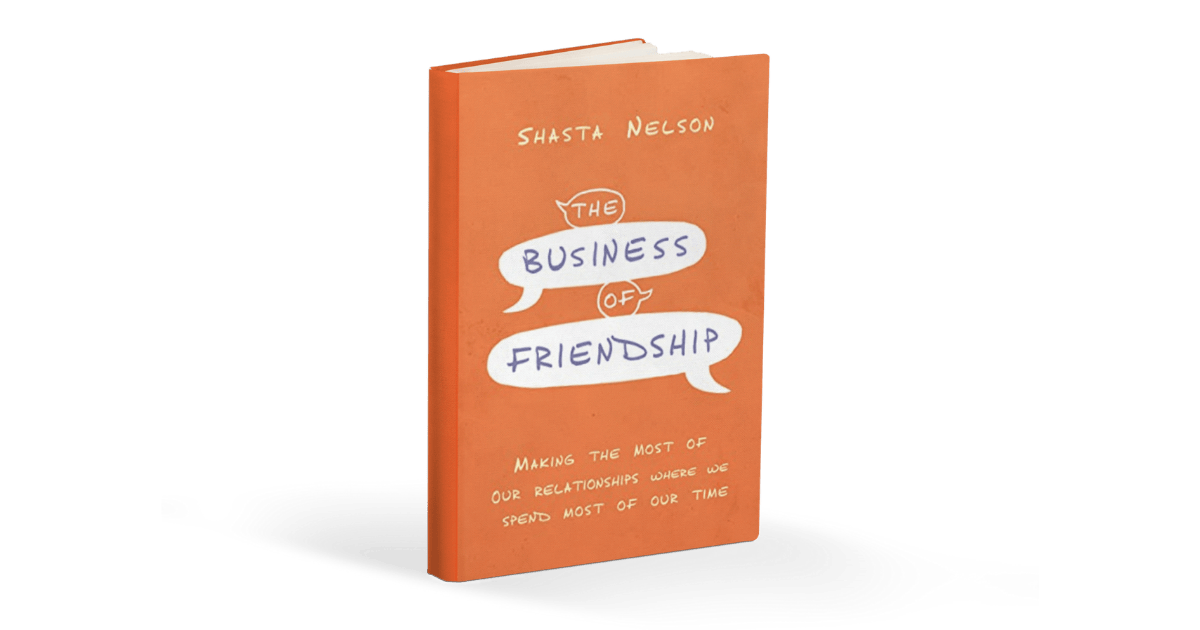
This month’s wellbeing read is The Business of Friendship: Making the Most of Our Relationships Where We Spend Most of Our Time — a smart, warm, research-grounded case for why the friendships we build at work aren’t a distraction from the job. They are the job, in more ways than we realize.
Who Is Shasta Nelson?
Nelson has been studying friendship — yes, professionally, and yes, that’s as wonderful as it sounds — for over 15 years. She’s a three-time author, a sought-after keynote speaker, and a social relationships expert whose frameworks are used by organizations including Google, LinkedIn, and Walmart. Her research has been featured in Harvard Business Review and TIME, her TEDx talks have reached nearly a million viewers, and she’s the author of two previous books worth knowing: Friendships Don’t Just Happen! and Frientimacy: How to Deepen Friendships for Lifelong Health and Happiness.
She has, in other words, thought about this longer and harder than anyone else in the room. And she brings all of it to bear here.
So, What’s It Actually About?
Nelson opens with a stat that’s hard to shake: about 20% of us report feeling lonely at work almost all the time, and around 60% feel it at least half the time. We’re showing up, doing the work, filling the calendar — and quietly, persistently disconnected from the people sitting right next to us (or on the other side of the screen).
The Business of Friendship argues that this isn’t just a personal wellbeing problem. It’s a professional one. Workers who have a genuine friend at work are measurably more engaged, more productive, less likely to burn out, and more loyal to their organizations. The data is unambiguous. What’s been missing is a practical guide for how to actually build those relationships — especially in a world of hybrid schedules, back-to-back Zooms, and professional cultures that quietly discourage anything that looks too much like “just hanging out.”
Nelson fills that gap. She breaks down the three core requirements of any healthy relationship, gives readers tools to assess the friendships they already have (and identify which ones need tending), and addresses the fears that hold a lot of us back — the worry about favoritism, about blurring professional lines, about what happens when a work friendship gets complicated.
For women navigating leadership at any level, that last section alone is worth the read.
What You’ll Take Away
- Loneliness at work is more common than we admit — and more costly. Nelson names the thing that a lot of us feel but don’t say out loud. Disconnection at work doesn’t just affect our mood. It shows up in our energy, our creativity, our health, and eventually our performance. Naming it is the first step to changing it.
- Friendship doesn’t just happen — it’s built. This is the throughline of all of Nelson’s work, and she makes it concrete here. Healthy relationships require three things: positivity, consistency, and vulnerability. She gives you a framework for understanding where your work relationships stand on each dimension — and what to do about the gaps.
- You don’t have to be best friends with everyone. But you do need someone. The book is refreshingly realistic about this. Nelson isn’t asking you to love your colleagues. She’s asking you to invest meaningfully in at least a few genuine connections — because the research is clear that even one real friendship at work changes the entire experience.
- Leaders set the tone on connection. If you manage people, this book will make you rethink how you’re building (or inadvertently blocking) a sense of belonging on your team. Nelson is practical and specific about what leaders can do — not through mandatory fun, but through the small, consistent choices that signal that people matter.
- The “Sunday Scaries” are often a relationship problem. This reframe hit differently. That dread before the workweek isn’t always about the work itself — it’s often about the feeling of walking into a place where you don’t feel seen or supported. Fix the connection, and you may find the rest gets easier too.
Why We’re Recommending It
We spend more waking hours at work than almost anywhere else. It seems obvious, when you say it out loud, that the relationships we have there would matter enormously to our wellbeing. And yet most of us have never been given a roadmap for building them intentionally.
The Business of Friendship is that roadmap. It’s the kind of book you’ll find yourself quoting to a colleague over lunch — or better yet, just pressing into their hands.
Get the Book
The Business of Friendship is available now wherever books are sold, including Amazon, Barnes & Noble, Bookshop.org, and Books-A-Million.
Learn more about Shasta Nelson and her work at shastanelson.com.