
















The Conversation About Menopause Has Finally Changed. Here’s Your Guide.
Not long ago, menopause was the subject women whispered about — if they talked about it at all. It was associated with endings, with slowing down, with the quiet expectation that a certain vitality was simply past its expiration date. The medical community largely agreed: symptoms were inevitable, options were limited, and the whole thing was best gotten through as quietly as possible.
That story is being rewritten in real time. And Dr. Jessica Shepherd is one of the people writing it.
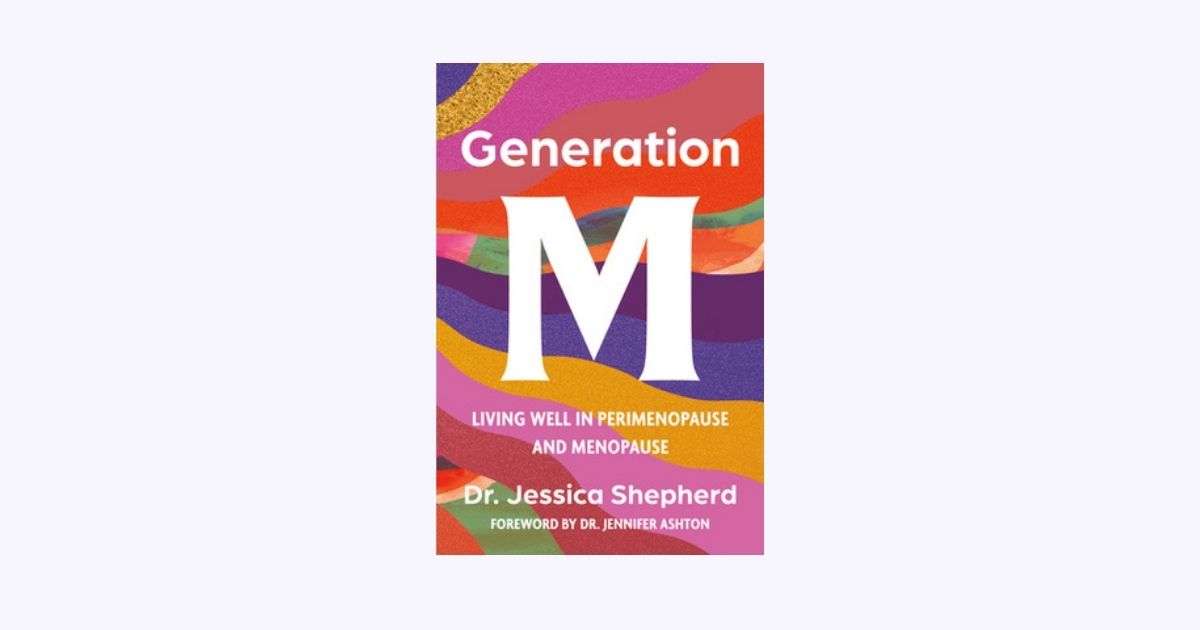
Generation M: Living Well in Perimenopause and Menopause is the evidence-based, holistic, refreshingly direct guide that this generation of women has been waiting for — one that treats midlife not as a decline to manage, but as a transition to navigate with knowledge, intention, and more than a little confidence.
Who Is Dr. Jessica Shepherd?
Shepherd is a board-certified OB/GYN, menopause expert, and women’s health advocate whose mission is straightforward: to give women the information they deserve, clearly and without condescension. She has been recognized with numerous awards for her work as a physician and leader in women’s health, and is a familiar face across major media — The Today Show, Good Morning America, CNN, CBSN, and MSNBC — as well as a regular contributor to Forbes, Vogue, Self, and Women’s Health.
She treats the whole patient, not just her parts. That philosophy shapes every page of this book.
So, What’s It Actually About?
Shepherd opens by naming something that most medical texts have avoided: menopause has historically been described in terms so negative — “women’s hell,” “the death of sex” — that many women arrive at this stage already demoralized, before a single symptom has appeared. Her first order of business is to throw out that framing entirely.
Generation M is organized as a practical, evidence-based playbook for perimenopause and menopause — covering the full range of what women might experience, why it’s happening physiologically, and what the most current research says about how to address it. She goes deep on hormone replacement therapy (HRT), including a clear-eyed look at the safety data that for decades was misunderstood, and she’s specific about what medications exist, how they work, and when they might be appropriate.
But the book goes well beyond medication. Shepherd covers nutrition, exercise, sleep, mindfulness, sexual health, and the cognitive changes that often accompany this transition — including the brain fog that so many women experience but so few feel comfortable naming at work or at home. She weaves in conversations with leading experts across disciplines, as well as real stories from women living through perimenopause and menopause, giving the book a warmth and relatability that pure medical guides often lack.
For professional women in their forties and fifties who are navigating this transition in the middle of demanding careers — often without adequate support or even adequate information — this book is both a resource and a relief.
What You’ll Take Away
- Perimenopause can start earlier than you think — and symptoms are wide-ranging. Shepherd’s thorough symptom guide is one of the book’s most immediately useful features. Many women are experiencing perimenopause without knowing it; the list of what can be connected to hormonal changes (including, yes, tinnitus) is genuinely eye-opening.
- The HRT conversation deserves a fresh look. For years, hormone replacement therapy was associated with risk and treated with wide suspicion. Shepherd walks through the most current research carefully and accessibly — giving readers the information they need to have an informed conversation with their own doctors rather than defaulting to fear or avoidance.
- Your brain is changing. That’s not a metaphor. One of the book’s most important sections addresses cognitive changes during menopause — the memory lapses, the word-finding difficulties, the concentration challenges that many women notice but don’t connect to hormones. Naming this clearly, and explaining what’s behind it, is quietly one of the most validating things the book does.
- This transition is also a doorway. Shepherd doesn’t frame menopause as an ending. Her consistent message is that women who enter this stage with good information, good habits, and good medical support are positioned to live vibrantly and powerfully for decades beyond it. That’s not spin — it’s what the longevity research increasingly shows.
- You deserve a care team that takes this seriously. The book gives you the language and the knowledge to advocate for yourself in medical settings — to ask for what you need, push back on dismissive responses, and find providers who treat this transition with the seriousness it deserves.
Why We’re Recommending It Now
Millions of women are in perimenopause or menopause right now, navigating it largely in silence, often while managing significant professional and personal responsibilities. Generation M exists to change that — to give this transition the rigorous, respectful, practical attention it has always deserved.
Read it before you think you need it. Read it especially if you think you might be in it already. And definitely pass it to someone you love who is.
Get The Book
Generation M: Living Well in Perimenopause and Menopause is available now wherever books are sold, including Amazon, Barnes & Noble, Bookshop.org, and Books-A-Million.
Learn more about Dr. Jessica Shepherd at jessicashepherdmd.com.