

















The Relationship That Makes Everything Else Work Better
The research on this is unambiguous, even if we don’t talk about it enough: strong friendships are one of the most powerful predictors of health, resilience, and longevity we have. Women with close, high-quality friendships report lower stress, better sleep, stronger immune function, and a significantly greater sense of purpose — the kind of foundation that quietly shows up everywhere else, including at work.
And yet, for most professional women, friendship is the relationship that gets the least intentional investment. We protect time for our careers, our families, our health. Friendships? We fit them in when everything else allows — which, honestly, is less and less often.
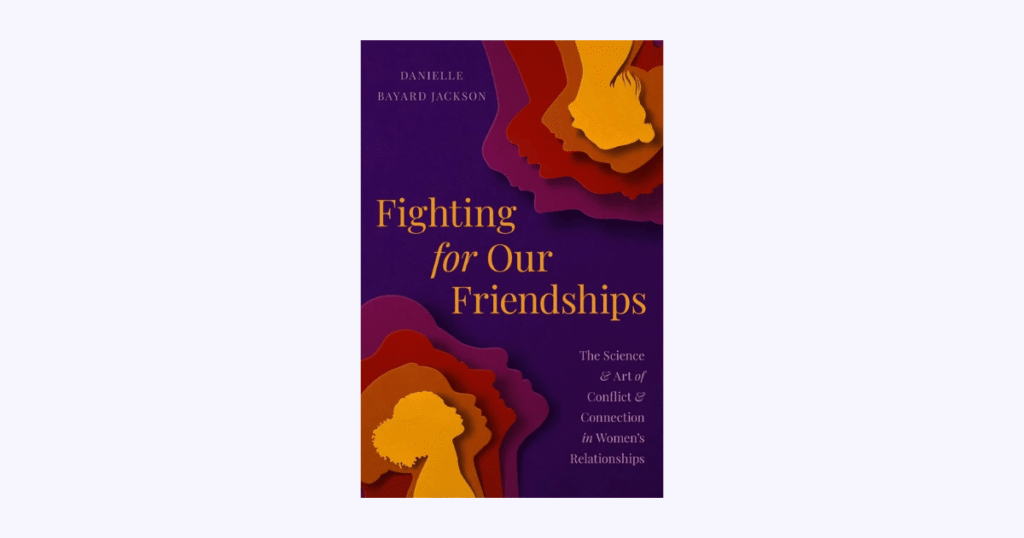
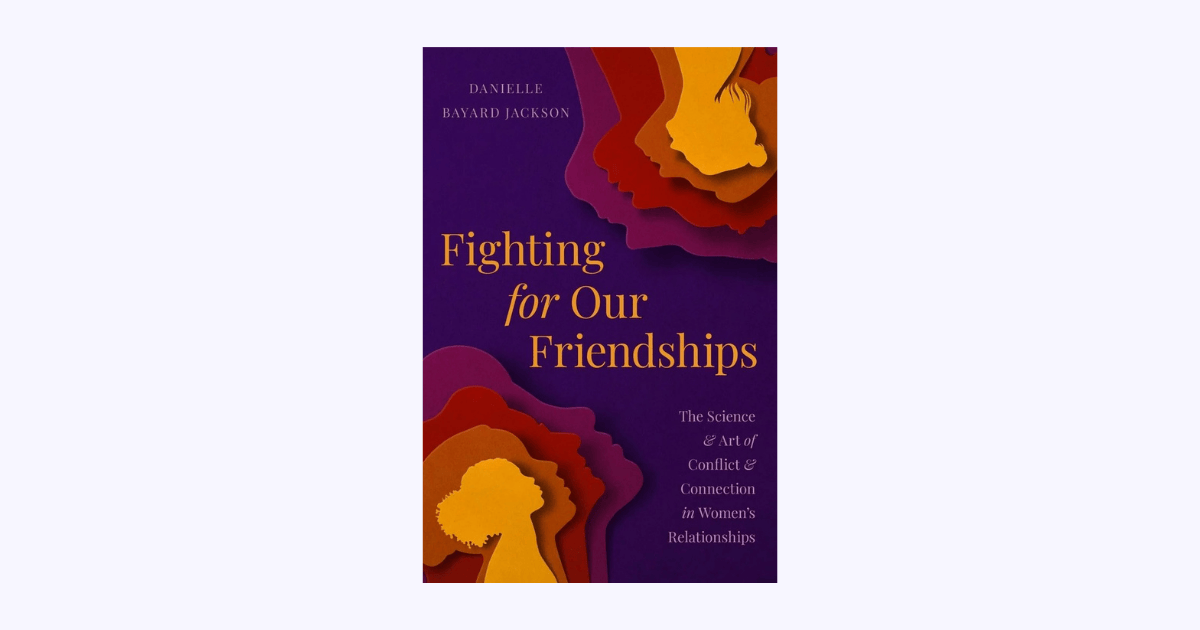
Danielle Bayard Jackson thinks we have the priority order backwards. And Fighting for Our Friendships: The Science and Art of Conflict and Connection in Women’s Relationships (Hachette, 2024) is her thorough, warm, research-backed case for why the quality of our friendships isn’t a lifestyle nicety. It’s a life strategy.
Who Is Danielle Bayard Jackson?
Jackson started out as a high school teacher, watching teenage girls cycle through friendships with an intensity that left real emotional wreckage. Then she became a publicist — and found her high-achieving adult clients quietly confessing the same struggles, just with better vocabularies and busier calendars.
That through-line sent her back to the research. For the past seven years she’s been studying women’s cooperation, communication, and conflict through the lens of behavioral science, eventually becoming the go-to friendship expert for Bumble For Friends and a recurring voice in the New York Times, NBC News, Essence, Good Morning America, and Psychology Today. She now directs the Women’s Relational Health Institute, where she conducts research and develops training for organizations that want to build stronger bonds among their teams.
She is, in short, the friend who has done all the reading so you don’t have to.
So, What’s It Actually About?
Jackson opens with a question that’s harder to answer than it looks: why are women’s friendships simultaneously the deepest relationships in our lives and the most fragile? Research shows that women’s platonic relationships tend to be more intimate and emotionally sustaining than men’s — and also more easily ruptured, with less resilience when things go sideways.
Her answer: it’s not a character flaw. It’s a pattern, and patterns can be understood and changed.
The book is structured in two parts. The first covers the mechanics of female friendship — the three core “affinities” that draw women together, the covert ways we sometimes hurt each other (often without realizing it), and the people-pleasing habits that, paradoxically, keep friendships from deepening. The second part is the handbook: scripts and strategies for navigating nine of the most common and most challenging friend dynamics, from the friend who never reciprocates to the one who makes everything about her relationship, to the friend you love but have genuinely outgrown.
What makes Jackson’s approach distinct is that she doesn’t treat conflict as a sign that a friendship is failing. She treats it as an opportunity — a doorway, if you’re willing to walk through it, to something more honest and more durable on the other side. In a culture that increasingly encourages us to quietly exit any relationship that causes friction, she’s making the case for staying and working it out.
For busy professional women who struggle to find time for friendships in the first place, that reframe is a gift.
What You’ll Take Away
- Conflict avoidance isn’t keeping the peace — it’s building resentment. Jackson’s research is clear: the friendships where nothing is ever addressed don’t stay comfortable forever. The unexpressed things accumulate. She gives you the language and the scripts to say the hard thing before it becomes the thing that ends the friendship.
- People-pleasing delays real intimacy. This one lands. The habit of smoothing everything over, of being endlessly agreeable, of never asking for what we actually need — it doesn’t make us better friends. It keeps friendships at a surface level where they’re easier to lose. Jackson explains exactly why, and what to do instead.
- You probably have a “friend type” pattern too. The nine friend archetypes Jackson profiles aren’t just a taxonomy of difficult people — they’re also a mirror. Most readers will find themselves in at least one of them, which is uncomfortable in exactly the way good books are supposed to be.
- Jealousy and envy are friendship data, not friendship dealbreakers. In a particularly honest chapter, Jackson reframes these feelings as signals worth examining rather than evidence that something is wrong with you (or the friendship). This section pairs beautifully with the parallel reframe in Ruchika Malhotra’s Uncompete — worth noting if you’re reading both.
- You can actually script this. One of the most immediately useful things about this book is the scripts. Not word-for-word lines to recite, but frameworks for how to start a hard conversation — which, for many of us, is exactly the thing standing between the friendship we have and the one we want.
Why We’re Recommending It
Adult friendship is genuinely hard. The research on loneliness is stark, the cultural script for making and keeping friends as adults is basically nonexistent, and for professional women juggling careers, families, and everything else — friendship often gets pushed to the bottom of the list until it quietly disappears.
Fighting for Our Friendships treats that problem with the seriousness it deserves. Jackson is warm, research-grounded, and refreshingly honest — including about her own friendship failures. This is the book to read when you’re ready to stop letting the good ones quietly slip away.
Get the Book
Fighting for Our Friendships: The Science and Art of Conflict and Connection in Women’s Relationships is available now wherever books are sold, including Amazon, Barnes & Noble, Bookshop.org, and Books-A-Million.
Learn more about Danielle Bayard Jackson and her work at daniellebayardjackson.com.